

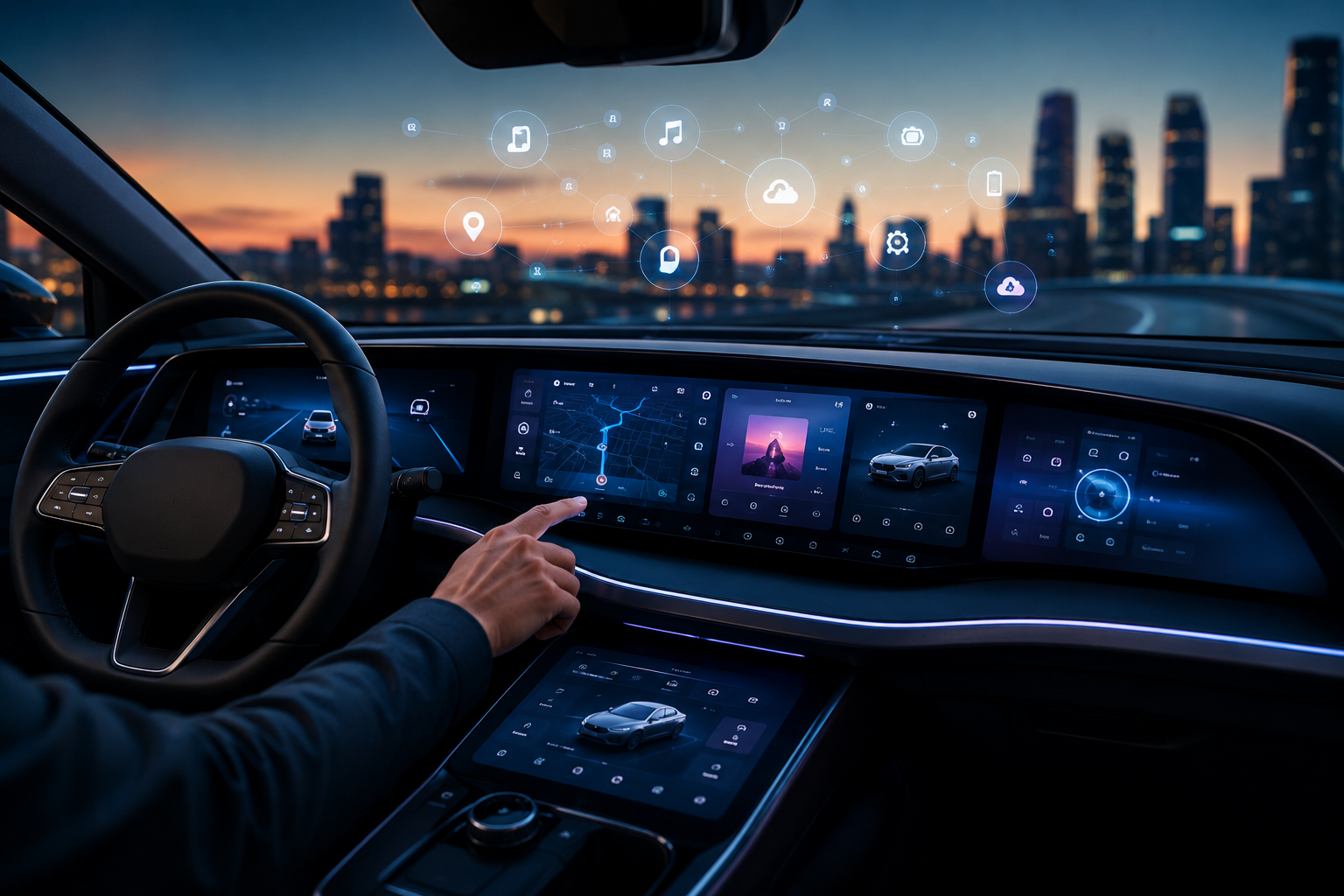
There was a time when the most important elements of a car’s interior were mechanical: the weight of the steering wheel, the clarity of the dials, the tactile click of a button. Today, that hierarchy has shifted. Increasingly, the defining feature of a modern vehicle is not how it feels to drive—but how it feels to interact with.
From minimalist touchscreens to fully integrated digital ecosystems, the car dashboard is undergoing a transformation that mirrors the evolution of smartphones and consumer apps. As automotive manufacturers compete not just on performance but on experience, the dashboard has quietly become one of the most contested arenas in design: a true UX battleground.
From Instruments to Interfaces
Traditional dashboards were built around function. Speedometers, fuel gauges, and warning lights delivered essential information in a fixed, predictable format. Interaction was limited, and for good reason—drivers needed clarity, not complexity.
The shift began with infotainment systems, which introduced navigation, media, and connectivity features into the cabin. Early iterations were often clunky, buried behind confusing menus or reliant on awkward physical controls. But as consumer expectations evolved—driven largely by smartphones—so too did the standards for in-car interfaces.
Today’s dashboards are less about instrumentation and more about interaction. Screens dominate, physical buttons are disappearing, and software updates can redefine the driving experience overnight.
The Influence of App Design
Modern car interfaces increasingly borrow from the principles of mobile UX. Clean layouts, gesture-based controls, and customisable home screens are now common features. The logic is simple: drivers already understand how to use apps, so why not apply the same design language to vehicles?
This convergence has led to a more intuitive user experience—but not without challenges. Unlike phones, cars operate in high-stakes environments where distraction has real consequences. Designers must balance familiarity with safety, ensuring that interfaces remain usable at speed.
Voice control has emerged as one solution, allowing drivers to interact with systems without taking their hands off the wheel. Meanwhile, haptic feedback and simplified menu structures aim to reduce cognitive load. The goal is not just usability, but seamlessness—an interface that feels almost invisible.
Minimalism vs Functionality
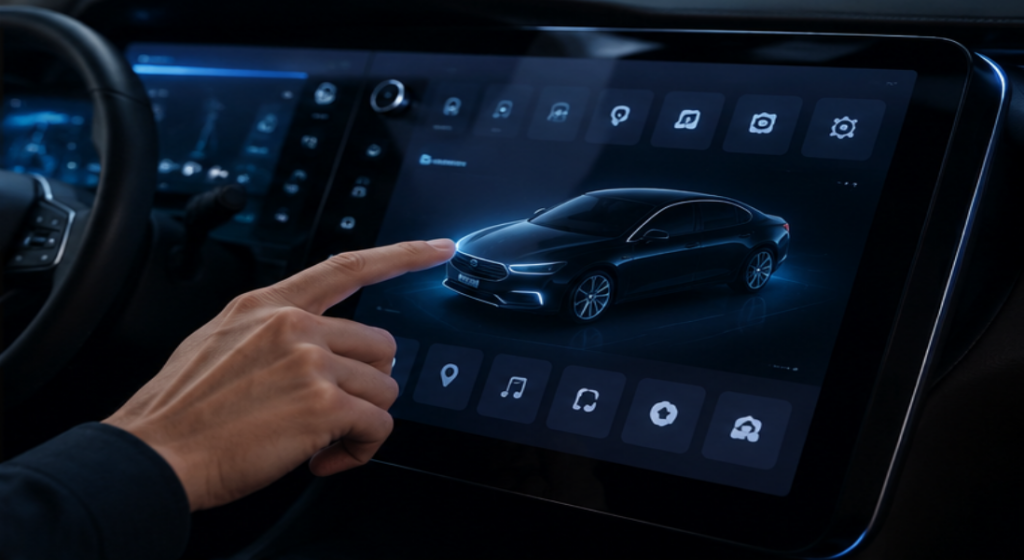
One of the most visible trends in dashboard design is the move towards minimalism. Some manufacturers have stripped interiors back to a single central screen, eliminating nearly all physical controls. The appeal is aesthetic as much as practical: fewer components, cleaner lines, and a more “digital-first” feel.
However, this approach has sparked debate. Critics argue that removing tactile controls can make basic functions—like adjusting temperature or volume—more cumbersome. Without physical reference points, drivers may need to glance at screens more frequently, potentially increasing distraction.
This tension between form and function is at the heart of the UX battleground. Should dashboards prioritise visual simplicity, or retain physical elements for ease of use? There is no universal answer, and different brands are taking different approaches.
Personalisation and Digital Identity
As dashboards become more software-driven, they also become more personal. Drivers can now customise layouts, save preferences, and even sync profiles across multiple vehicles. In some cases, the car recognises the driver and adjusts settings automatically—from seat position to preferred apps.
This shift reflects a broader trend in automotive culture: the rise of personalisation. Vehicles are no longer just modes of transport; they are extensions of identity. The interface plays a crucial role in this, acting as the primary point of interaction between driver and machine.
Even subtle elements, such as ambient lighting or digital themes, contribute to this sense of ownership. And while physical modifications remain popular, the digital layer is becoming just as significant.
For those investing in both aesthetic and functional upgrades, companies like Number 1 Plates have seen growing demand from motorists who want every detail of their vehicle—physical and digital—to feel cohesive and considered.
The Ecosystem Approach
Another defining feature of modern dashboards is their integration into broader digital ecosystems. Cars are no longer standalone products; they are connected devices.
Smartphone mirroring systems allow seamless access to apps, while cloud-based services enable real-time updates, remote diagnostics, and over-the-air improvements. Some manufacturers are even developing proprietary operating systems, aiming to control the entire user experience from interface to infrastructure.
This ecosystem approach raises important questions about data, privacy, and control. As vehicles collect more information about driver behaviour, location, and preferences, the role of UX extends beyond design into ethics.
Who owns the data? How is it used? And how transparent are these systems to the user? These are not purely technical questions—they are central to the future of automotive UX.
The Road Ahead
Looking forward, the evolution of car dashboards shows no sign of slowing. Advances in augmented reality, artificial intelligence, and gesture control are likely to further reshape how drivers interact with their vehicles.
Heads-up displays may replace traditional screens altogether, projecting information directly onto the windscreen. AI assistants could anticipate needs before commands are given. And as autonomous driving technologies mature, the role of the dashboard may shift once again—from control centre to entertainment hub.
Yet, amid all this innovation, the core challenge remains the same: designing interfaces that enhance, rather than complicate, the driving experience.
Conclusion
The modern car dashboard is no longer just a collection of instruments—it is a dynamic, evolving interface that sits at the intersection of design, technology, and human behaviour. As manufacturers compete to deliver the most intuitive, engaging, and seamless experience, UX has become a defining factor in automotive design.
In this new landscape, the winners will not simply be those with the most advanced technology, but those who understand how to integrate it thoughtfully into the driving experience. Because in the end, the best interface is not the one with the most features—but the one that feels like it was designed for you.