
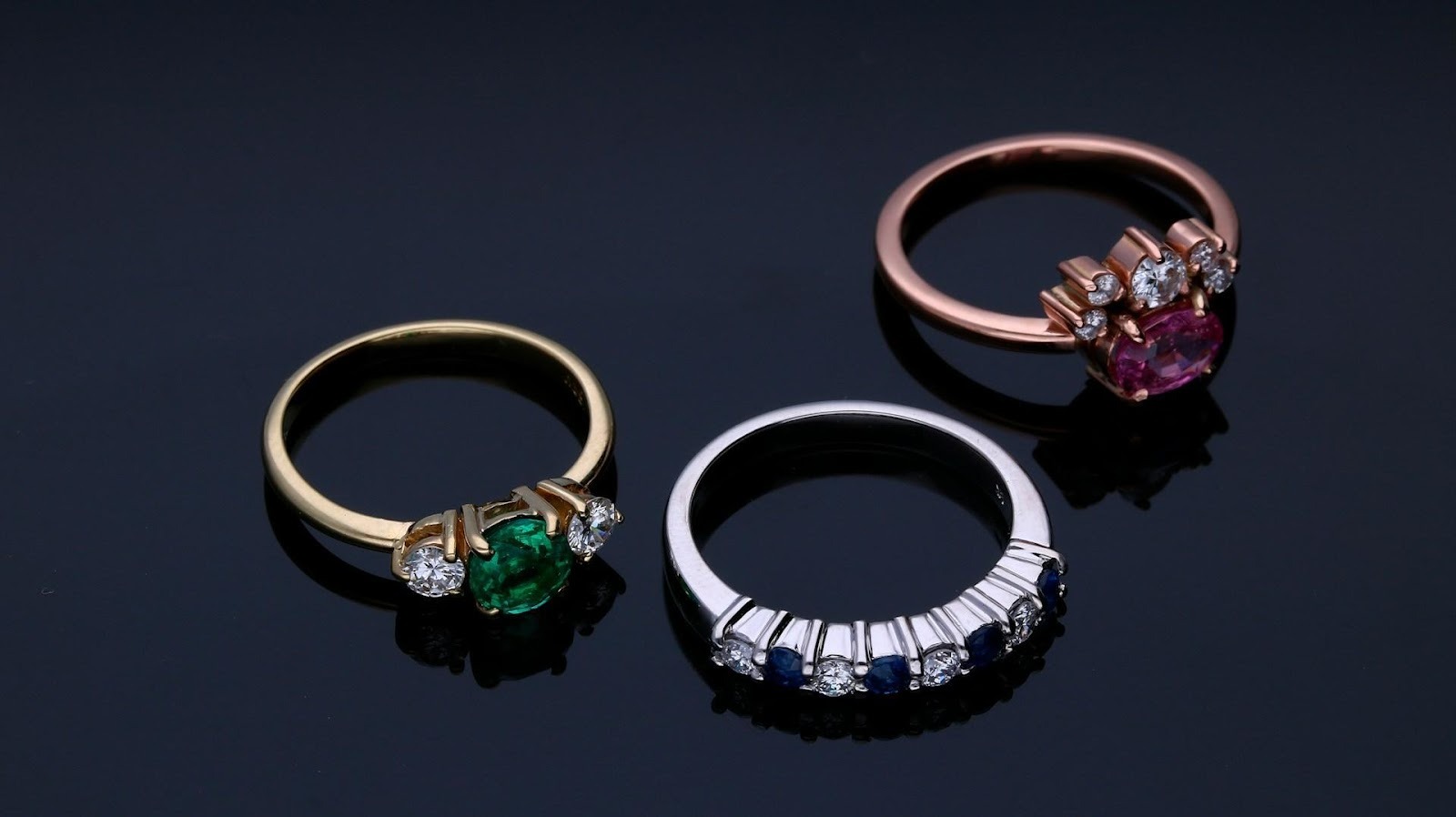
You probably wouldn’t buy a car without checking the mileage, would you? Or a house without paperwork; no one in their right mind would buy one, no matter how affordable it may look (because if it’s that cheap, there’s usually a reason).
Yet many people still buy gemstones—including engagement rings—without doing even precursory research. And that is a recipe for a disaster. That’s how you end up with a stone that scratches within a year, a color that looks nothing like the photos, or a “great deal” that actually has no resale value. Worse, you might propose with a ring that symbolizes the opposite of what you intended (yes, that happens).
A bit of research is all it takes. It’s the only way to avoid sunk cost and long-term regret, especially if you intend to spend serious money on a gemstone ring. So, without further ado, here’s what smart shoppers actually research before buying gemstone jewelry, and what you should expect a serious seller to explain clearly.
Pricing ranges: what costs what, and why
You want to know whether a price makes sense. Not “cheap vs expensive,” but why two sapphire rings that look similar can sit at opposite ends of the spectrum.
Buyers research here:
- Price per carat by gemstone type,
- How color saturation, clarity, and cut affect cost,
- Whether the stone is natural, lab-grown, or treated.
For example, natural sapphires often range widely depending on origin and color consistency. Kashmir sapphires command premiums. Heated stones cost less than untreated ones. Lab-grown sapphires drop the price further and can be a great investment (cheaper than natural but practically the same), but they do change the value equation entirely.
If a site lists prices without explaining these drivers, consider that a red flag. You want transparency, no matter what you decide to buy.
Durability: daily wear vs special occasions
This question jumps to the top when the ring might become an engagement ring. You need a stone that survives daily wear, not one that chips during a grocery run.
Most buyers check:
- Mohs hardness rating,
- Resistance to chipping or abrasion,
- Suitability for long-term, everyday use.
Diamonds sit at a 10. Sapphires and rubies at 9. Emeralds are a bit lower and require more care. That doesn’t make softer stones “bad” at all, but it changes expectations. A good seller explains trade-offs instead of overselling toughness.
Symbolism and meaning: what the stone says (even if you don’t say it)
You might not care about symbolism. But your partner, their family, or future-you might. It costs nothing to research:
- Traditional meanings (sapphire = loyalty, emerald = renewal, ruby = passion, etc.),
- Cultural or historical associations,
- Birthstone connections.
This matters more if your partner cares about these things. But regardless, engagement rings carry narratives. And you want that narrative to align with the relationship, not contradict it by accident.
Certification and authenticity
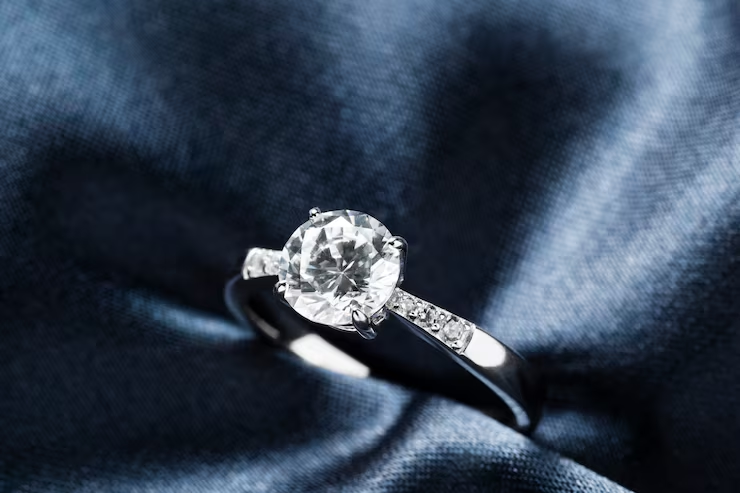
This is where knowledgeable buyers slow down. Certification separates “trust me” from proof.
Shoppers look for:
- Independent gem lab reports (GIA, IGI, AGS, etc.),
- Clear disclosure of treatments,
- Verification of natural vs lab-grown.
Certification dramatically influences purchase confidence. According to industry data, inquiries about gemstone certification from consumers have jumped sharply in recent years, with GIA reporting a 340% increase in consumer interest in certified gemstones since 2020. This is evidence that buyers increasingly demand independent verification before committing to a high-value purchase and you should join the wave.
Popular styles and setting choices
Style research often starts visually, but it’s technical, too.
Common queries include:
- Solitaire vs halo vs three-stone,
- Vintage-inspired vs modern minimal,
- Prong count and bezel security.
And settings matter as well because if it’s poorly designed, it makes even a durable stone vulnerable. A well-engineered one extends the life of the ring.
Metal choices: more than just color preference
Yellow gold, white gold, platinum, rose gold. You probably have a favorite. But buyers research practical differences too.
They compare:
- Durability and scratch resistance,
- Maintenance needs (rhodium plating, polishing),
- Skin sensitivity and alloy composition.
Platinum costs more but wears differently than gold. White gold needs upkeep. These details affect long-term satisfaction, so take some time to understand the differences and what your partner prefers (and how they plan to wear the ring).
Care, maintenance, and long-term ownership
Nobody wants surprise maintenance. Yet many people still forget to ask.
Smart buyers look for:
- Cleaning guidelines,
- Resizing policies,
- Repair and warranty coverage.
If care instructions feel vague (or are missing), it’s safe to take that as a sign the seller expects problems later.
What a good seller’s website should show you
By now, a pattern should be clear. A strong seller answers questions before you ask them.
You should see:
- Clear gemstone education (not just product pages)
- Pricing transparency and quality explanations
- Certification details front and center
- Real photos, not just renders
- Straightforward policies
Diamondere is a great example. The site combines educational content with detailed listings, making it easier to evaluate options side by side.
If you want transparent pricing, clear certification, and a wide range of styles designed for daily wear, you can purchase sapphire rings from Diamondere with a solid understanding of what you’re getting. And why it’s priced the way it is.
Bonus: how shoppers search and what that means for marketers
If you’re building or optimizing a jewelry site, search behavior offers clues.
Common query → Best content format:
- “Are sapphires durable enough for engagement rings?” → Educational blog + FAQ
- “Sapphire ring price per carat” → Comparison tables + explainer
- “Natural vs lab sapphire” → Side-by-side guide
- “Certified sapphire ring” → Product pages with visible reports
SERP features often include featured snippets, People Also Ask boxes, and image packs. Customer feedback is also recommended. Sites that answer clearly and concisely tend to win those spots.
Wrapping Up
Research doesn’t kill romance. On the contrary, it protects it. When you understand pricing, durability, meaning, and sourcing, you buy with confidence instead of hope. And that confidence shows up every time the ring catches your eye; years after the proposal, not just on the day itself.